%20--%3e%3cdefs%3e%3cstyle%3e%20.st0%20{%20fill:%20%23f1f047;%20}%20.st1%20{%20fill:%20%23364834;%20}%20%3c/style%3e%3c/defs%3e%3cg%3e%3cpath%20class='st0'%20d='M285.75,0c.36,1.19,1.58.6,3.08.7,133.78,8.91,241.57,116.67,250.47,250.48.1,1.49-.49,2.71.7,3.07v32.25c-.99.14-.62,1.06-.7,2.32-8.89,133.78-116.64,241.56-250.48,250.48-1.48.1-2.71-.49-3.07.7h-32.25c-.14-.99-1.06-.62-2.3-.7C117.37,530.4,9.59,422.61.7,288.82c-.08-1.26.28-2.17-.7-2.32v-33C5.22,185.58,33.62,122.51,83.33,74.91,130.17,30.06,190.18,4.71,254.25,0h31.5ZM232.82,299.57l-.18-31.81c-.04-7.15-5.11-11.85-12.18-11.52-4.33.2-8.28,1.64-10.56,5.51-1.19,2.02-.63,4.77-3.42,6.4,1.16-9.15,1.89-17.81,1.51-26.86l-17.34-.09-.04,58.5,17.39-.08.31-19.15c.07-4.52,2.3-11.37,6.28-9.52.8.37,1.44,1.54,1.46,2.81l.25,25.92,16.51-.11ZM301.5,241.29h-16.5v58.51h16.5v-58.51ZM264.29,282.47c-1.88,1.94-4.09,3.25-6.57,2.51-1.89-.56-4.26-1.57-4.36-4.55l27.12-.13c1.14-9.01-.84-19.03-10.35-22.28-6.98-2.38-14.82-2.56-21.59.44-8.4,3.73-12.11,12.23-11.92,21.05.23,10.15,6.12,18.82,16.31,21.01,10.88,2.34,25.21-1.23,27.04-13.95-5.6-1.31-10.47-3.59-15.7-4.12ZM350.65,278.76c0-12.6-10.21-22.81-22.81-22.81s-22.81,10.21-22.81,22.81,10.21,22.81,22.81,22.81,22.81-10.21,22.81-22.81Z'/%3e%3cg%3e%3cpath%20class='st1'%20d='M232.82,299.57l-16.51.11-.25-25.92c-.01-1.27-.65-2.44-1.46-2.81-3.98-1.85-6.21,5.01-6.28,9.52l-.31,19.15-17.39.08.04-58.5,17.34.09c.38,9.06-.35,17.71-1.51,26.86,2.79-1.63,2.23-4.39,3.42-6.4,2.28-3.86,6.23-5.31,10.56-5.51,7.07-.33,12.14,4.37,12.18,11.52l.18,31.81Z'/%3e%3crect%20class='st1'%20x='285'%20y='241.29'%20width='16.5'%20height='58.51'/%3e%3cg%3e%3cpath%20class='st1'%20d='M350.65,278.76c0,12.6-10.21,22.81-22.81,22.81s-22.81-10.21-22.81-22.81,10.21-22.81,22.81-22.81,22.81,10.21,22.81,22.81ZM333.99,278.77c0-3.4-2.76-6.16-6.16-6.16s-6.16,2.76-6.16,6.16,2.76,6.16,6.16,6.16,6.16-2.76,6.16-6.16Z'/%3e%3ccircle%20class='st0'%20cx='327.83'%20cy='278.77'%20r='6.16'/%3e%3c/g%3e%3cg%3e%3cpath%20class='st1'%20d='M264.29,282.47c5.22.53,10.1,2.81,15.7,4.12-1.83,12.72-16.16,16.29-27.04,13.95-10.19-2.2-16.09-10.86-16.31-21.01-.2-8.82,3.52-17.32,11.92-21.05,6.76-3.01,14.6-2.83,21.59-.44,9.51,3.25,11.49,13.26,10.35,22.28l-27.12.13c.09,2.97,2.47,3.98,4.36,4.55,2.49.74,4.69-.57,6.57-2.51ZM263.93,274.85c-3.14-3.29-7.43-2.52-9.78.22,3.67.36,6.59.7,9.78-.22Z'/%3e%3cpath%20class='st0'%20d='M263.93,274.85c-3.19.92-6.11.58-9.78.22,2.36-2.74,6.64-3.51,9.78-.22Z'/%3e%3c/g%3e%3c/g%3e%3c/g%3e%3c/svg%3e)
Creative making is part of humanity’s DNA. The earliest traces of human beings are carved marks, artful cave paintings and — we can imagine — spoken stories passed on from one generation to the next.
“Getting to a cultural experience does not have to be a big project that causes stress. It should be something that gives you what you need here and now.”
Kristin, stress coach at Helo
Why does culture matter for health?
It is only when cities form and writing develops that culture begins to be set down in earnest. Not just stories, but songs, religion and tributes to the dead. We have always been creative, expressing ourselves, our group, our religion and our culture in different ways. And we like following stories and finding new creative solutions.
So it is no coincidence that it can feel impossible to switch off a really good television series, or that new technical solutions keep being developed.
One explanation for culture’s high standing is that beauty, art and culture both activate the brain and strengthen our health — mentally, physically and socially. This has been shown in study after study, and is so well established that it appears in the UN Universal Declaration of Human Rights, Article 27:
“Everyone has the right freely to participate in the cultural life of the community, to enjoy the arts and to share in scientific advancement and its benefits.”
But what are the health benefits of culture, exactly?
How culture affects the brain and wellbeing
Here are some examples of how culture and creativity can promote health:
- Just six minutes of reading can lower the pulse and reduce stress.
- Art gives us the chance to step outside ourselves and practise mindfulness, which can reduce stress, anxiety and depression.
- Music affects our emotional memories and can at the same time stimulate the production of feel-good hormones such as serotonin, oxytocin and dopamine.
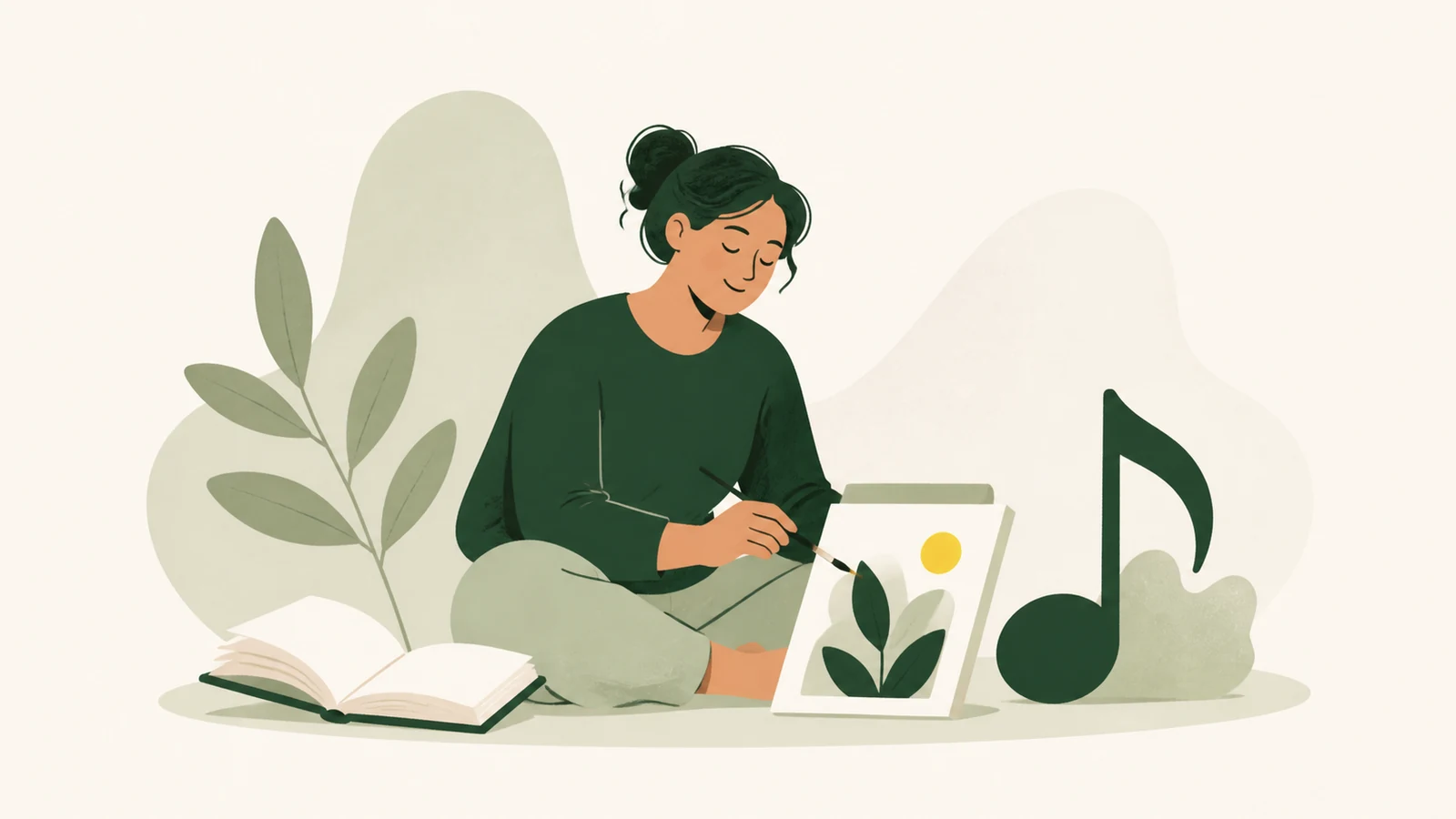
- Making something yourself — or with others — by painting, crafting, dancing, acting, playing an instrument, singing or working with your hands, can both reduce and prevent stress.
Why does culture work so well for recovery?
The brain loves repetition — the safe and the predictable. At the same time the brain is plastic and enjoys learning new things. So when we make or take in culture, we can land entirely in the present. We relax into the experience and get a moment of recovery.
Culture in everyday life — it does not have to be grand
Culture does not have to be something large or elaborate. It can just as easily be something you have always enjoyed doing, or something new you want to try.
You can take in culture:
- at home
- at work
- at a museum or arts centre
You can experience culture alone, with a friend, with your family, with colleagues, or together with a whole room of strangers.
Examples of cultural activities in everyday life
Culture can be, for example:
- Knitting or embroidering
- Going to the theatre
- Building with Lego
- Crafting
- Painting
- Dancing
- Singing in a choir (or in the shower)
- Watching a really good film on the sofa
- Keeping a diary
- Cooking or baking
- Playing in a band
- Listening to a podcast
- Throwing pots
- Going to a chocolate tasting
- Visiting a photography exhibition
- Watching a match
- Having a book club
- Woodworking
- Making jewellery
3 simple ways to take a cultural micro-pause during the day
As a stress coach I am an advocate of taking the small things in everyday life that give you recovery. Getting to a cultural experience does not have to be a big project that causes stress. It should be something that gives you what you need here and now.
Small cultural pauses can make a great difference to recovery over time. Here are three simple ways to take a cultural micro-pause during the day.
1. Look at art
Do you have a painting or a print on the wall? Sit in front of it for a while and study the details.
2. Listen to a favourite song
Choose a song you love and give yourself a few minutes to really listen.
3. Read or listen to a book
Choose a book that gives you a sense of safety. One simple trick is to think about the kind of books you enjoyed as a child — historical adventures, for instance.
Would you like support in handling stress and recovery?