%20--%3e%3cdefs%3e%3cstyle%3e%20.st0%20{%20fill:%20%23f1f047;%20}%20.st1%20{%20fill:%20%23364834;%20}%20%3c/style%3e%3c/defs%3e%3cg%3e%3cpath%20class='st0'%20d='M285.75,0c.36,1.19,1.58.6,3.08.7,133.78,8.91,241.57,116.67,250.47,250.48.1,1.49-.49,2.71.7,3.07v32.25c-.99.14-.62,1.06-.7,2.32-8.89,133.78-116.64,241.56-250.48,250.48-1.48.1-2.71-.49-3.07.7h-32.25c-.14-.99-1.06-.62-2.3-.7C117.37,530.4,9.59,422.61.7,288.82c-.08-1.26.28-2.17-.7-2.32v-33C5.22,185.58,33.62,122.51,83.33,74.91,130.17,30.06,190.18,4.71,254.25,0h31.5ZM232.82,299.57l-.18-31.81c-.04-7.15-5.11-11.85-12.18-11.52-4.33.2-8.28,1.64-10.56,5.51-1.19,2.02-.63,4.77-3.42,6.4,1.16-9.15,1.89-17.81,1.51-26.86l-17.34-.09-.04,58.5,17.39-.08.31-19.15c.07-4.52,2.3-11.37,6.28-9.52.8.37,1.44,1.54,1.46,2.81l.25,25.92,16.51-.11ZM301.5,241.29h-16.5v58.51h16.5v-58.51ZM264.29,282.47c-1.88,1.94-4.09,3.25-6.57,2.51-1.89-.56-4.26-1.57-4.36-4.55l27.12-.13c1.14-9.01-.84-19.03-10.35-22.28-6.98-2.38-14.82-2.56-21.59.44-8.4,3.73-12.11,12.23-11.92,21.05.23,10.15,6.12,18.82,16.31,21.01,10.88,2.34,25.21-1.23,27.04-13.95-5.6-1.31-10.47-3.59-15.7-4.12ZM350.65,278.76c0-12.6-10.21-22.81-22.81-22.81s-22.81,10.21-22.81,22.81,10.21,22.81,22.81,22.81,22.81-10.21,22.81-22.81Z'/%3e%3cg%3e%3cpath%20class='st1'%20d='M232.82,299.57l-16.51.11-.25-25.92c-.01-1.27-.65-2.44-1.46-2.81-3.98-1.85-6.21,5.01-6.28,9.52l-.31,19.15-17.39.08.04-58.5,17.34.09c.38,9.06-.35,17.71-1.51,26.86,2.79-1.63,2.23-4.39,3.42-6.4,2.28-3.86,6.23-5.31,10.56-5.51,7.07-.33,12.14,4.37,12.18,11.52l.18,31.81Z'/%3e%3crect%20class='st1'%20x='285'%20y='241.29'%20width='16.5'%20height='58.51'/%3e%3cg%3e%3cpath%20class='st1'%20d='M350.65,278.76c0,12.6-10.21,22.81-22.81,22.81s-22.81-10.21-22.81-22.81,10.21-22.81,22.81-22.81,22.81,10.21,22.81,22.81ZM333.99,278.77c0-3.4-2.76-6.16-6.16-6.16s-6.16,2.76-6.16,6.16,2.76,6.16,6.16,6.16,6.16-2.76,6.16-6.16Z'/%3e%3ccircle%20class='st0'%20cx='327.83'%20cy='278.77'%20r='6.16'/%3e%3c/g%3e%3cg%3e%3cpath%20class='st1'%20d='M264.29,282.47c5.22.53,10.1,2.81,15.7,4.12-1.83,12.72-16.16,16.29-27.04,13.95-10.19-2.2-16.09-10.86-16.31-21.01-.2-8.82,3.52-17.32,11.92-21.05,6.76-3.01,14.6-2.83,21.59-.44,9.51,3.25,11.49,13.26,10.35,22.28l-27.12.13c.09,2.97,2.47,3.98,4.36,4.55,2.49.74,4.69-.57,6.57-2.51ZM263.93,274.85c-3.14-3.29-7.43-2.52-9.78.22,3.67.36,6.59.7,9.78-.22Z'/%3e%3cpath%20class='st0'%20d='M263.93,274.85c-3.19.92-6.11.58-9.78.22,2.36-2.74,6.64-3.51,9.78-.22Z'/%3e%3c/g%3e%3c/g%3e%3c/g%3e%3c/svg%3e)
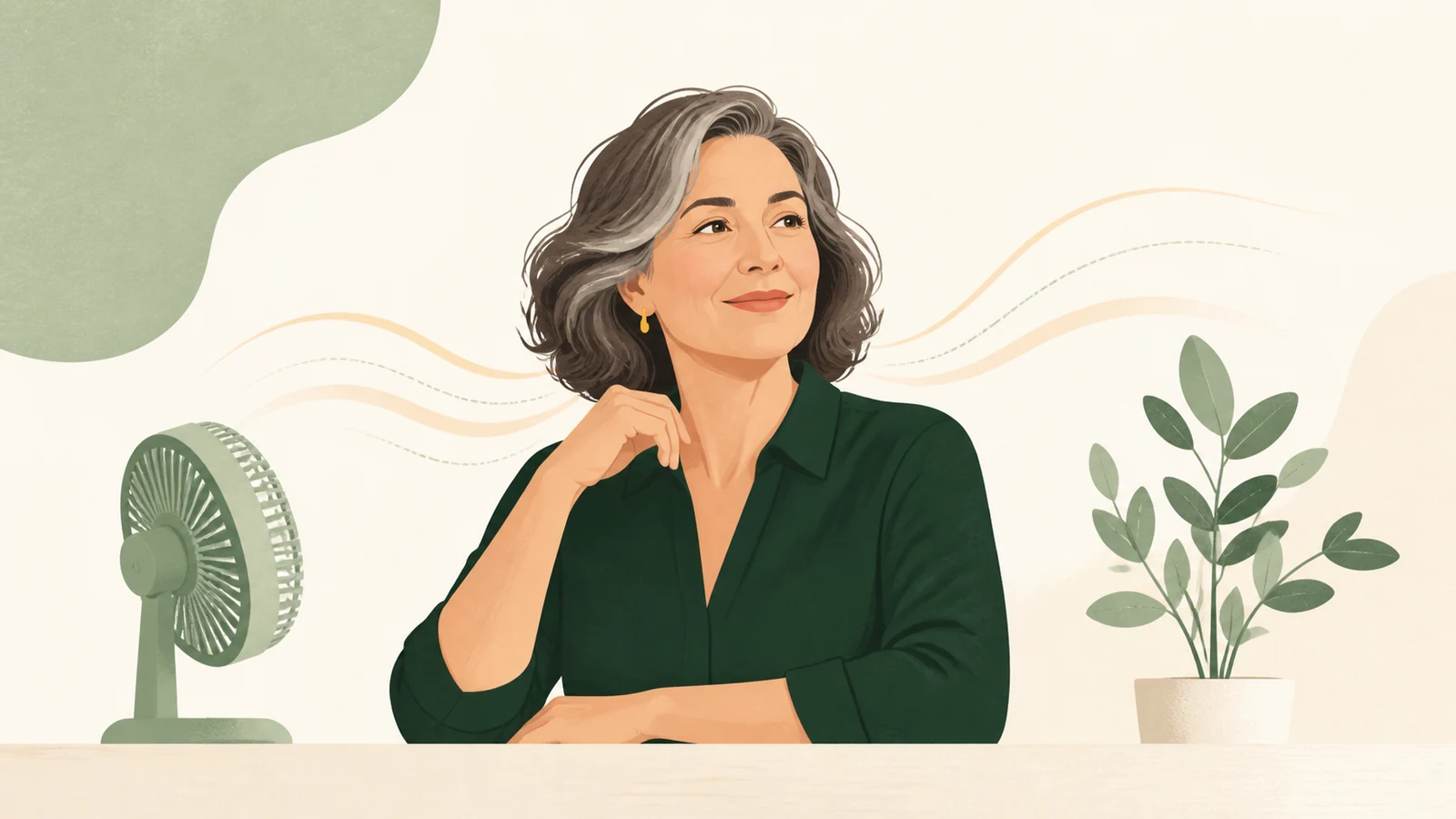
Many workplaces talk about stress, ergonomics and workload. But one area is still surprisingly quiet: the menopause — even though it affects a large part of the workforce. In Sweden, more than a million women are in the middle of the menopause, and many of them are in the middle of their careers. They are managers, specialists, mentors and key people in organisations. At the same time, the body can start behaving in ways that feel both unexpected and frustrating.
This is not a private matter. It is a work environment matter.
“Women going through the menopause often have decades of experience, expertise and leadership behind them. They are often the ones who hold teams together, resolve conflicts and see the whole picture.”
Annelie, speaker on the menopause and women’s health at Helo
How the menopause can affect work
The menopause looks different for everyone. Some barely notice it, while others get symptoms that affect their energy, their concentration and their wellbeing.
Common symptoms that can show up at work include:
- tiredness and sleep problems
- difficulty concentrating, or “brain fog”
- hot flushes and sweating
- greater sensitivity to stress
- joint pain and stiffness
- low mood or anxiety
In a workplace this can sometimes be read as something else entirely: reduced performance, low motivation or stress. But what actually lies behind it may be the body’s hormonal changes.
Where the knowledge is missing, women risk:
- doubting their own competence
- working on even though the body needs recovery
- or, at worst, leaving working life earlier than planned.
And workplaces genuinely cannot afford that.
The menopause is a work environment matter too
Under the Swedish Work Environment Act, employers are responsible for preventing ill health and creating a work environment that works for every employee. That means stages of life that affect health and capacity to work need to be taken seriously too.
The menopause connects to the organisational and social work environment, but also to the physical one. It is not about making large or expensive changes — it is often about knowledge, understanding and small adjustments.
How we can look after each other at work
The most important step is actually quite simple: start talking about it.
When the menopause becomes a natural topic of conversation, much of the shame and the silence disappears. Colleagues and managers gain a better understanding of what is happening and how they can support.
A workplace where you can say “I had a really rough night with hot flushes” without feeling odd — that is an inclusive workplace.
Smart, simple adjustments
Small things can make a great difference day to day.
Here are some concrete examples:
- Flexibility at work — the option to adjust working hours or work from home when needed.
- Temperature and ventilation — a desk fan or better air can be decisive during hot flushes.
- The chance to recover — a short break, a walk or a quiet room can help with brain fog and tiredness.
- Knowledge among managers — when managers understand what the menopause involves, the conversation becomes far easier.
- An open culture — a workplace where people dare to talk about the different stages of life creates security.
A strength — not a problem
Women going through the menopause often have decades of experience, expertise and leadership behind them. They are often the ones who hold teams together, resolve conflicts and see the whole picture.
Understanding the menopause is therefore not only about kindness. It is about making the most of expertise and building working lives that last.
When workplaces start talking about the menopause, something important happens:
- women feel less alone
- employers gain more knowledge
- the work environment gets better for everyone.
And perhaps that is exactly where the change begins — with a little more understanding, a little more knowledge and a little more care for one another.
Would you like to train your staff on the menopause and women’s health?